Suches Vacation Rentals - Blog
Exploring the Roads that Once Led Home
This weekend I wanted to unwind in one of my favorite ways - hiking the national forest. I am not one of those people who has to trek to a view or waterfall to be refilled and refreshed. I unwind and connect with my inner peace simply by walking in the mountains and observing nature. This weekend, however, I was still battling a nasty cold and the reality was my energy stores were extremely low so instead we hopped in the 4 Runner and started connecting on service roads.
Humans and animals alike tend to follow the easiest path, and the service roads winding through the national forest are no exception. In many places, these roads trace the same routes once used by the families who lived here before this land became protected forest. That history felt especially real a few miles into our drive when we came across a small cemetery tucked quietly into the mountainside. A few headstones still stood with names and dates carefully carved into them. Others had weathered into blank slabs softened by moss and time, while some graves had no markings at all.
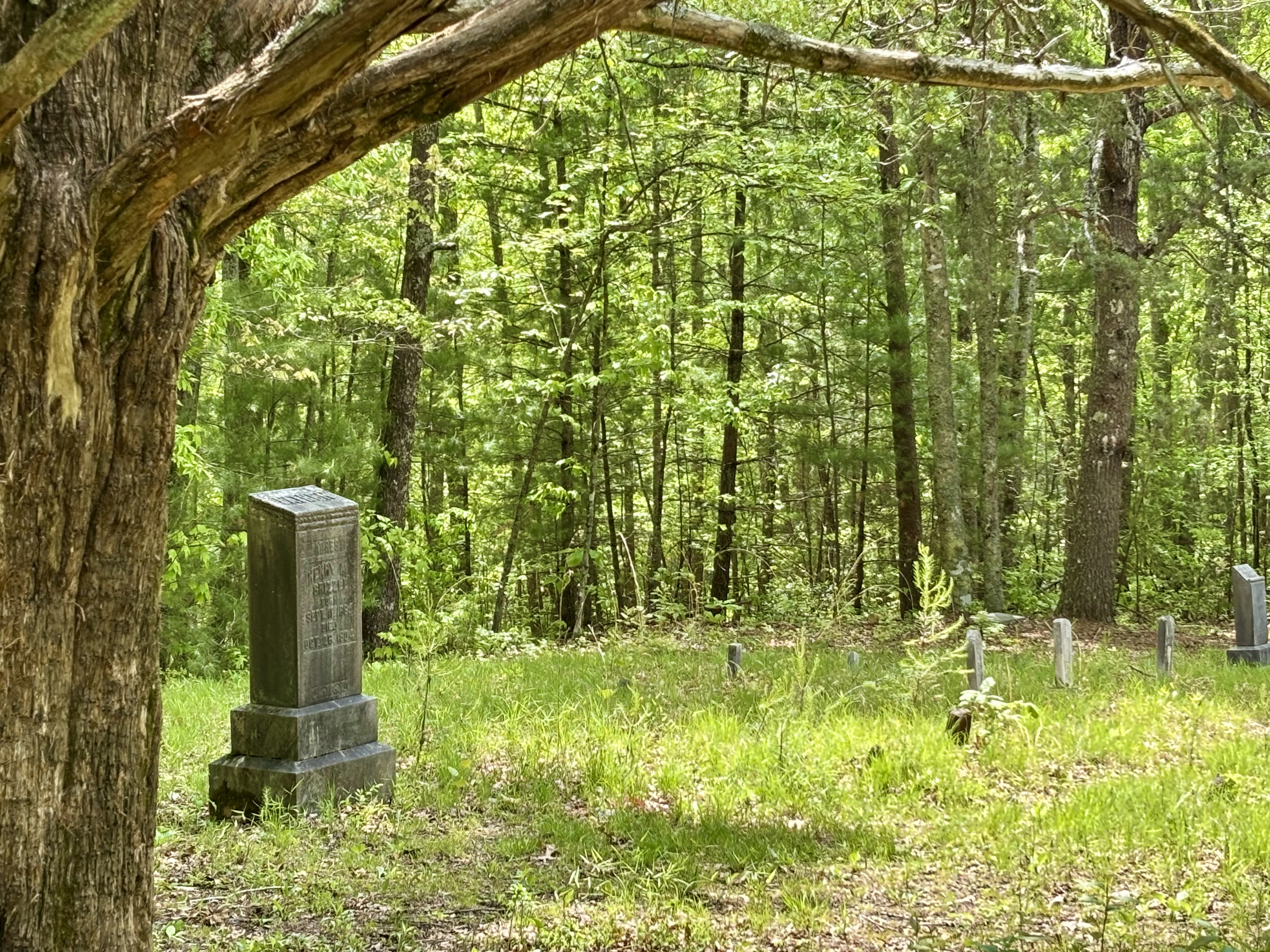
And standing there, surrounded by trees so thick it feels impossible anyone ever farmed this land, it becomes hard to imagine that these mountains once looked very different.
Long before much of this land became part of the Chattahoochee–Oconee National Forest, families cleared hillsides for small farms and homesteads. Appalachian settlers lived in isolated mountain communities where churches, gardens, livestock, and family cemeteries were often all within walking distance of one another. When roads were rough and travel was difficult, families commonly buried loved ones on their own land or near small community churches.
That is why, if you wander the backroads long enough, you occasionally come across cemeteries in places that now seem impossibly remote.
The forest grew back.
The people mostly left.
But the cemeteries remained.
Sometimes all that is left are fieldstones placed at the head of a grave by family members generations ago. Weather and time slowly erased the names, but not the evidence that someone was loved there.
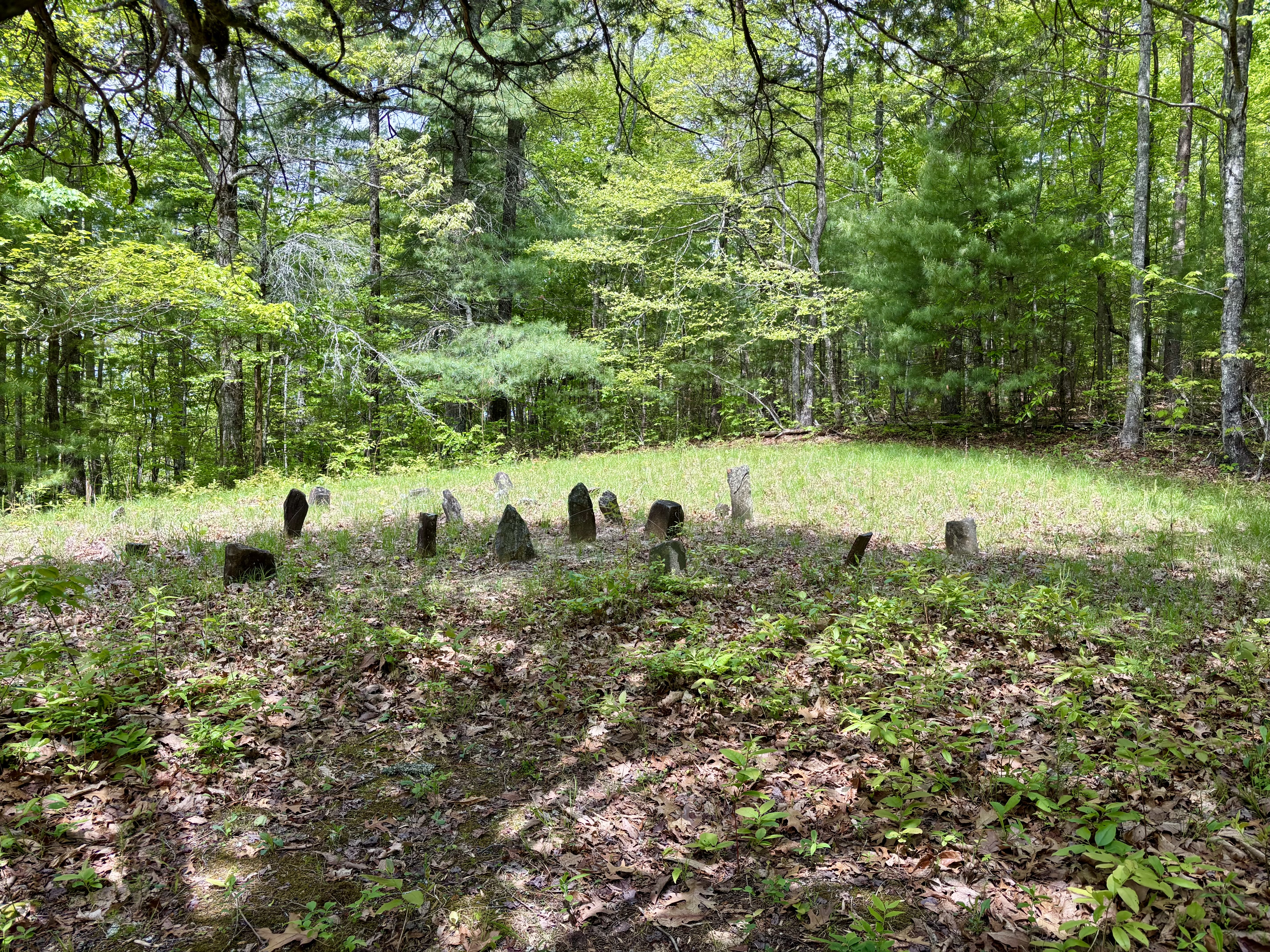
As I stood there, I kept thinking about how easy it is to view the national forest only as wilderness. But much of it was once patched together with small farms, cabins, gardens, cornfields, livestock pens, and mountain families trying to make a living from difficult land.
If you pay attention while driving the forest roads, you can still see traces of that life:
- stacked rock walls disappearing into the woods
- daffodils blooming where homes once stood
- old chimneys
- rusted fence lines
- tiny cemeteries on ridges
- narrow clearings reclaimed by trees
And then there are the food plots.
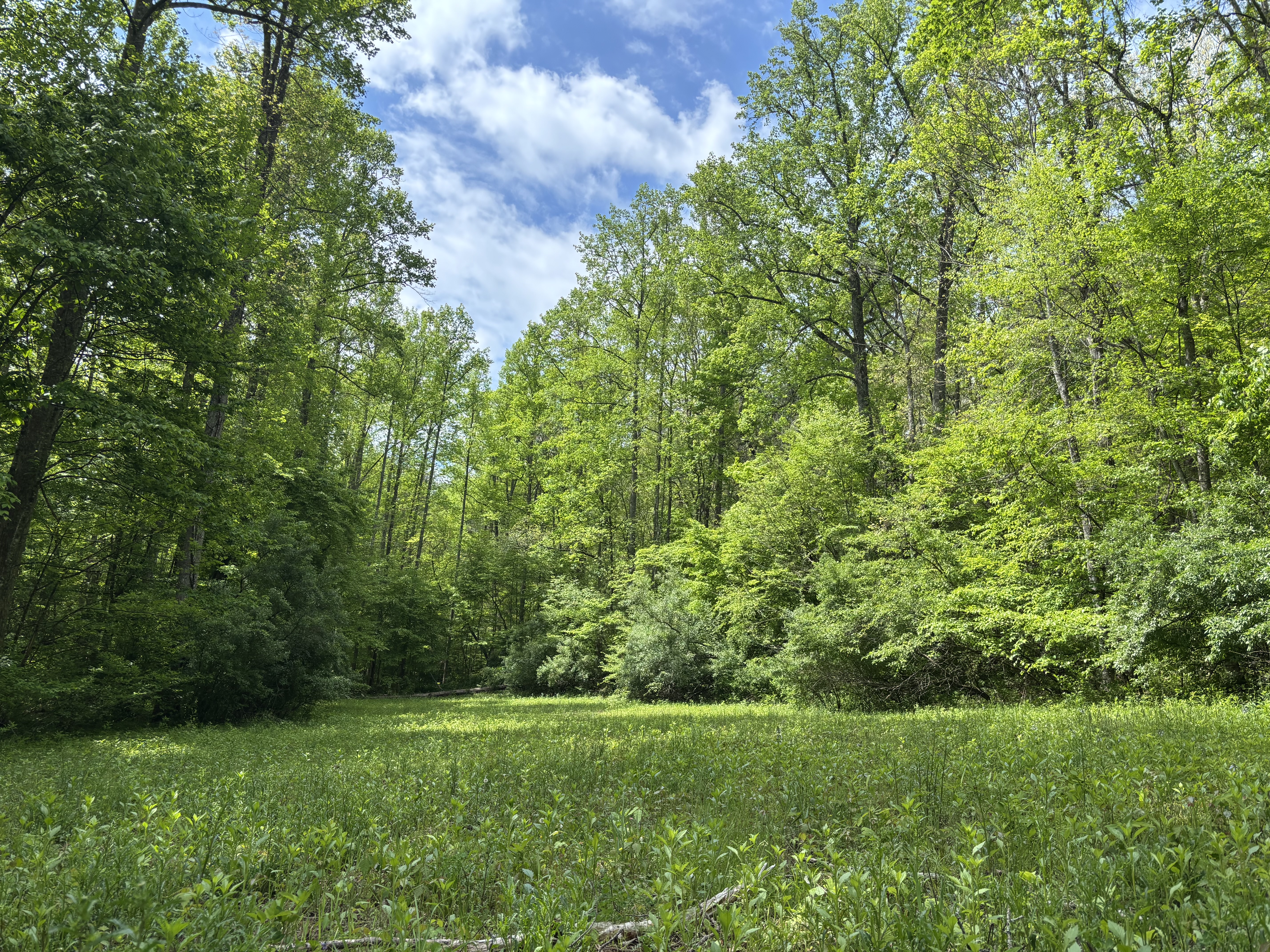
Many visitors notice them without realizing what they are — oddly open patches tucked into the forest, often planted with grasses or clover. These food plots are intentionally maintained to support wildlife populations like deer and turkey, especially during seasons when natural forage is limited. Georgia wildlife agencies and land managers use them as part of broader habitat management efforts.
So in a strange way, the land continues feeding life here.
Once it fed mountain families.
Now it feeds the wildlife that move quietly through the recovering forest.
And if you slow down enough on these mountain roads, you begin to realize the forest is layered with stories.
A hawk circling above an old pasture.
A forgotten cemetery hidden behind rhododendron.
A deer stepping into a food plot at dusk.
The mountains are beautiful because they are wild — but they are also beautiful because people loved this place long before we arrived.
That is part of what makes exploring these roads feel less like sightseeing and more like listening.
Sometimes the forest still remembers.
— Joni
Owner, Suches Vacation Rentals
Wandering the backroads of North Georgia whenever possible.
Created: Tue, Apr 14, 2026 by Joni Lee
Created: Fri, Mar 20, 2026 by Joni Lee
Created: Fri, Jan 30, 2026 by Joni Lee
Created: Sun, May 25, 2025 by Joni Lee
Created: Sun, May 25, 2025 by Joni Lee